
history
Published: 2026-03-18 20:47:44
GBENE
BEFORE SOMEONE COULD BE CALLED GBENE - 'GREAT,' THEY HAD TO PROVE IT. In modern politics, leadership is often inherited, purchased, or seized. In pre-colonial Ogoni society, the hi
By Idum Felix
verified
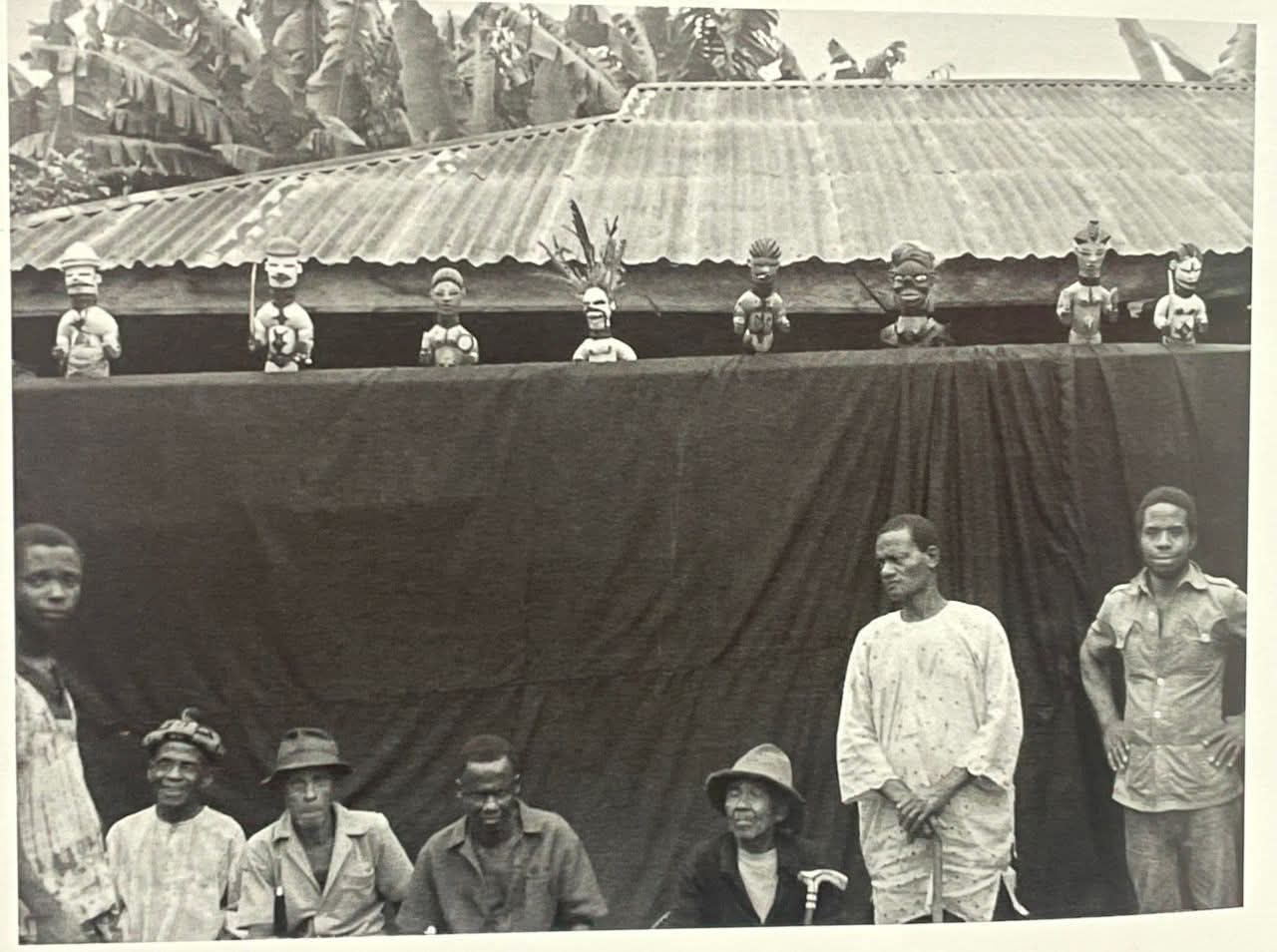
BEFORE SOMEONE COULD BE CALLED GBENE - 'GREAT,' THEY HAD TO PROVE IT.
In modern politics, leadership is often inherited, purchased, or seized. In pre-colonial Ogoni society, the highest form of leadership recognition; the Gbene title, could not be bought, inherited, or given. It had to be earned.
The word Gbene simply means 'Great.' But it was not a name. It was a prefix, a word added to a man's name only after he had proven, through sustained demonstration, that he deserved it. As one elder put it plainly in oral testimony:
'Gbene was not a name. It was a word appended to a name as a reward of great deeds.'
Phase One: Build a Life Worth Leading From:
Before a man could begin the journey toward the Gbene title, he had to first achieve social stability. He had to marry wives, build a household, and raise sons and daughters. He had to accumulate honest wealth through farming, trade, or craft, and demonstrate that he could provide for a community, not just himself.
He also had to perform the three foundational traditional rites: Yaa Ge, Yaa Nwii, and Yaa Be; sacred ceremonies tied to the Ogoni system of youth training and social classification. Only after all of this could a man even think about pursuing the Gbene title.
Phase Two: Years of Spiritual Preparation:
The Gbene candidate then spent years, sometimes the better part of a decade, in spiritual preparation. He initiated himself into the deep knowledge of medicine, ritual, and the supernatural arts. He conducted sacrifices at personal shrines and sharpened his capacity for leadership in battle and governance.
Critically, he did this alone, driven by his own inner calling. The texts describe it: 'He himself must experiment with different ritual elements as he was motivated and influenced by his own supernatural forebodings toward particular goals.' Authentic leadership required self-knowledge.
Phase Three: The Sacred Pilgrimage to Nama:
Having prepared himself, the candidate formally announced his intention to the priest of Nama, the ancestral spiritual city at the heart of Ogoni sacred geography. This formal announcement was called Kpaana Bu Nama - 'opening the door at Nama.'
Once the date was set, all past Gbene title holders, both living and departed, through spirit mediums, were notified. They were waiting for him, ready to test his worthiness supernaturally. The pilgrim dressed in red cloth, wore eagle feathers in his crown, carried a decorated sword, and set out.
There were four ritual stations on the route to Nama, each demanding a higher sacrifice. At the final station in a sacred forest, he planted a live tree in commemoration of his successful journey. Only then was the Gbene title conferred by the Mene Nama in a solemn public ceremony.
Phase Four: The Proclamation:
When a man achieved the Gbene title, special emissaries traveled from town to town throughout all of Ogoniland, blowing the Pumbu trumpet and the Gbon horn from about 4:00am, proclaiming that such-and-such had become Gbene.
The new Gbene automatically became lord over the land where he settled, ruler of his section of town, and could found a new settlement. He became, in the eyes of the community, a future ancestral spirit whose influence would continue even after death.
Why This Matters Today:
The Gbene system was not perfect, its later requirements became more extreme as competition intensified. But the philosophy behind it remains striking: the idea that leadership is not a title you hold but a standard you meet. That great men are made through process, not position.
In a world where leadership is often reduced to charisma, connections, or wealth, the Ogoni ancestors had already
designed a system that asked something more fundamental: What have you built? What have you sacrificed? What have you proven when the world was trying to stop you.
Moral
Ogoni history
Source / Origin
Ogoni history